Reinsurance: Prices Set to Fall Again for 2027

The Rendez-Vous de Septembre, which brought together the global insurance and reinsurance industry in Monaco from 5 to 9 September 2026, confirmed a new phase of market softening. For the January 2027 renewals, reinsurance prices are expected to keep falling, driven in particular by abundant capacity and the growing influx of alternative capital.
The global reinsurance market is entering a new phase of its cycle. Meeting in Monaco for the 68th Rendez-Vous de Septembre, insurers, reinsurers, brokers, investors and rating agencies extensively discussed the outlook for the 2027 contract renewals.
After an initial easing in 2025 followed by a sharper decline in 2026, pressure on rates is expected to continue into early next year. The discussions held in Monaco confirm a balance of power that is gradually shifting in favour of reinsurance buyers.
A further decline expected in January 2027
The property-catastrophe reinsurance market is expected to be particularly affected. According to analyses published after the Rendez-Vous de Septembre, market players broadly expect rates to fall by around 10% at the 1 January 2027 renewals. KBW believes reinsurers have largely priced in this outlook, although the final outcome will depend in particular on claims experience in the closing months of 2026.
Ahead of the Rendez-Vous de Septembre, Aon likewise expected property rates to fall by around 10% at the January renewal. The broker also noted that conditions could give insurers greater latitude to revise their reinsurance programmes.
This trend extends a movement already seen in the market. According to La Tribune de l'Assurance, prices fell by around 5% in 2025, before declining by around 10 to 15% on some renewals in 2026.
Abundant capital weighing on prices
One of the key factors identified in Monaco is the amount of capital available for reinsurance.
Aon estimates global reinsurer capital at around USD 800 billion at the end of June 2026, a record level. Strong financial performance across the sector in recent years has allowed traditional players to strengthen their capacity, while institutional investors continue to bring additional capital to the market.
This traditional capacity is complemented by the growth of alternative capital, particularly through Insurance-Linked Securities (ILS), catastrophe bonds and sidecar structures. This diversification of capacity sources is intensifying competition among providers of protection.
For insurers, this situation opens up more possibilities in negotiations: lower prices, higher limits or restructured programmes can all be considered against a backdrop of available capacity.
Reinsurers seeking to preserve their terms
The decline in rates does not, however, mean that reinsurers are willing to loosen every parameter of their contracts.
On the contrary, the discussions at the Rendez-Vous de Septembre point to a determination to preserve the technical quality of portfolios. Several analyses indicate that reinsurers are more willing to negotiate on price than on certain terms and conditions, in particular attachment points and protections against claims frequency.
S&P Global Ratings accordingly expects rate pressure to continue in 2027, while noting that abundant capacity could also put growing pressure on contractual terms. The agency nonetheless maintains a stable view of the sector's fundamentals, underpinned in particular by solid balance sheets.
The issue, then, is less a sudden upending of the market's balance than a gradual normalisation after several years that were particularly favourable to reinsurers.
Risk remains high despite falling prices
This pricing relief comes even as insured risks are not going away. Natural catastrophes, extreme weather events and rising claims costs continue to pose major challenges for the sector.
The paradox is therefore particularly visible in Monaco: the price of protection is falling even as the underlying risk remains significant.
The situation could also change rapidly in the event of a major catastrophe before the end of the year. The Atlantic hurricane season in particular remains a source of uncertainty for the 1 January 2027 negotiations. Aon, along with other market players, points out that the current trajectory depends in part on the absence of a major event that could alter market conditions.
Monaco, a strategic gathering for the global market
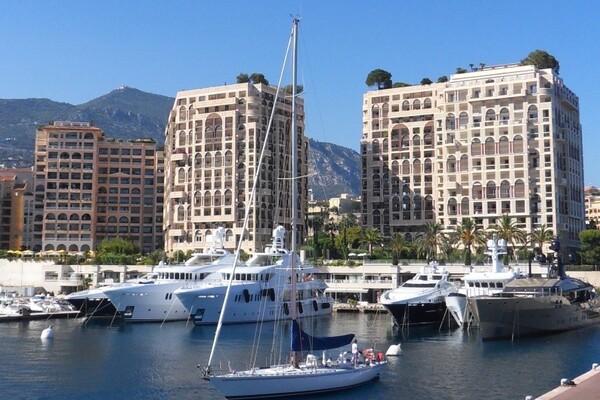
Every year, the Rendez-Vous de Septembre in Monte-Carlo offers a privileged moment to take the pulse of the global reinsurance market. Contracts are not necessarily concluded in Monaco, but meetings between insurers, reinsurers, brokers and investors help prepare the negotiations for the upcoming renewals.
The 2026 edition once again confirmed Monaco's role as an international meeting place for the industry. Discussions focused in particular on the outlook for 2027, available capital levels, natural catastrophes, ILS and evolving underwriting conditions.
For insurers, the message coming out of the Rendez-Vous is one of a market offering greater capacity and more room for negotiation. For reinsurers, the challenge going forward will be to maintain sufficient discipline as price competition intensifies.
The 1 January 2027 renewals will show to what extent the expectations voiced in Monaco actually translate into contract terms.
FAQ – Reinsurance: Outlook for 2027
Why are reinsurance prices expected to fall in 2027?
Reinsurance prices are expected to keep falling at the January 2027 renewals, mainly due to the abundant capacity available in the market. The return of significant capital and the growth of alternative reinsurance are intensifying competition among protection providers.
How much of a decline in reinsurance rates is expected for January 2027?
Analyses published around the Rendez-Vous de Septembre in Monaco point to a decline of up to around 10% on some property-catastrophe reinsurance programmes. The actual outcome will depend on market conditions, in particular the claims experience recorded by the end of 2026.
What is the role of the Rendez-Vous de Septembre in Monaco?
The Rendez-Vous de Septembre is one of the industry's leading international gatherings for insurance and reinsurance. It allows insurers, reinsurers, brokers and investors to meet and discuss market prospects ahead of the main renewal dates, particularly 1 January.
What is alternative capital in reinsurance?
Alternative capital refers to funding capacity, notably from institutional investors, used to cover insurance risks. It can take various forms, such as Insurance-Linked Securities (ILS), catastrophe bonds or sidecars. Its growth increases the capacity available for certain risks and contributes to competition in the reinsurance market.
Does the price decline mean that insured risks are decreasing?
No. The decline in rates mainly reflects reinsurance market conditions and the level of available capacity. Risks linked to natural catastrophes, extreme weather events or rising claims costs remain significant. A major event before the January 2027 renewals could in fact alter market conditions.